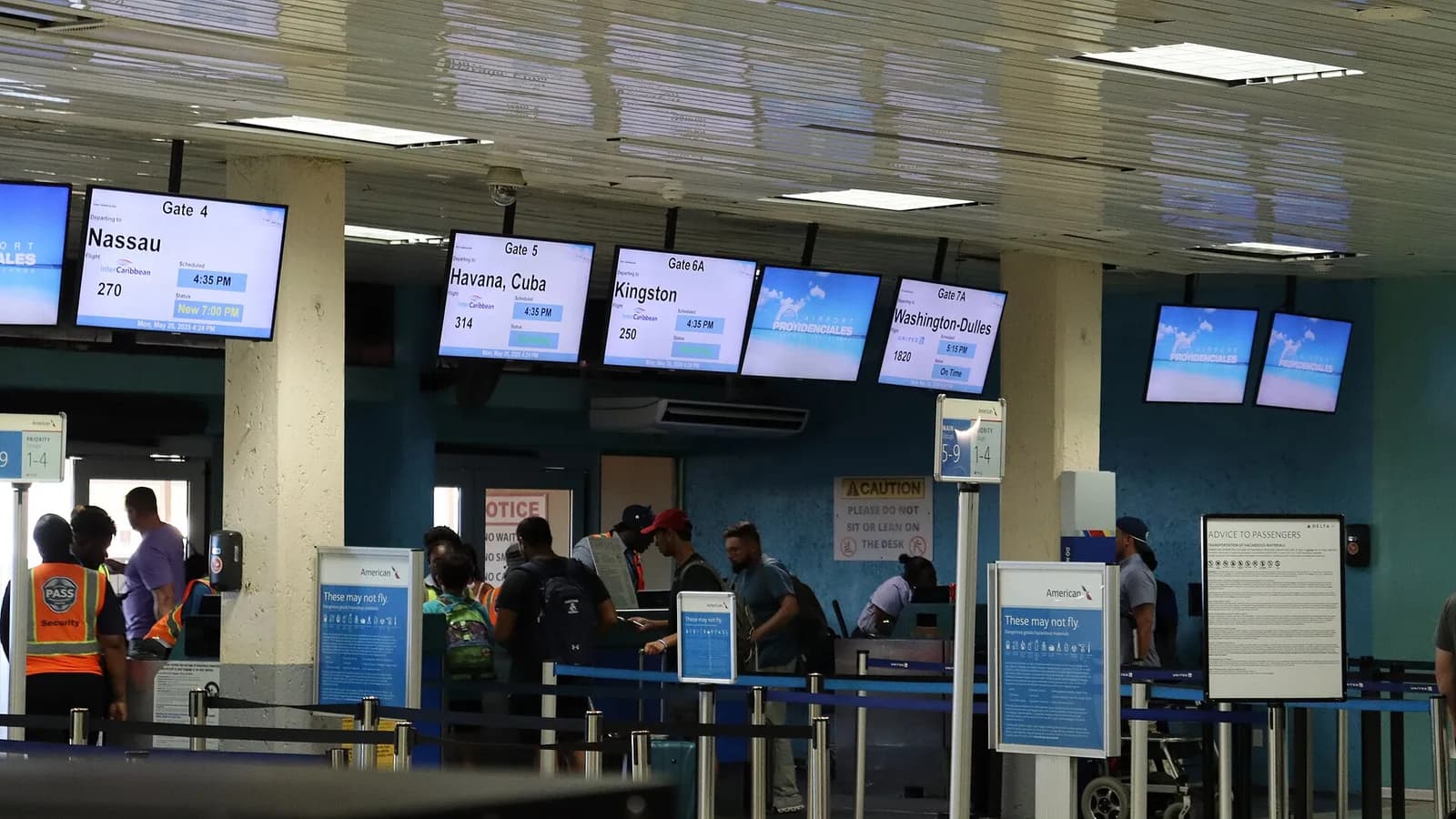
A nationwide FAA ground stop on a Friday afternoon froze takeoffs across the United States for roughly four to five hours, and the ripple effects lasted much longer. By 9 PM ET, FlightAware was tracking more than 8,000 delayed flights and 7,000 cancellations; CBC reported 6,700 cancellations and 8,600 delays by the time the stop was lifted at 8:15 PM. The FAA ground stop outage is a useful case study for any business that depends on systems it did not build and cannot fully control.
What makes this incident worth reading past the headlines is the cause. This was not a cyberattack, and officials said there was no confirmed link to the recent Microsoft Outlook outage. It was, by the government's own account, a routine patch to a communications network that went wrong in a system already stretched thin by age.
What actually happened during the FAA ground stop outage
The FAA issued the ground stop at 3:54 PM ET (some reports say 3:53 PM ET), citing "extraordinary circumstances and for reasons of safety." According to Transportation Secretary Ryan Duffy, TRACON (Terminal Radar Approach Control) facilities started seeing inconsistent data from radar feeds and aircraft communications. He pointed to aging analog telecom devices, specifically switches and routers, that became overloaded with data and began misbehaving.
An earlier CBS News report, citing multiple sources, said the trigger was an update to the private communications network that air traffic control relies on, operated by L3Harris. That update caused a system reboot, and the reboot is what produced the outage. During the White House press conference, both Duffy and Homeland Security Secretary Markwayne Mullin confirmed that patches to the existing system were behind the problem.
Reporting from Jon Ostrower of The Air Current traced the sequence: the outage started at the Chicago air traffic control center, then spread to Boston, Washington, New York and Minneapolis as the FAA grounded eastbound traffic and more facilities reported trouble. Both radar and radio frequencies used by controllers and pilots were affected.
Why a patch broke a safety-critical system
Duffy's own framing is worth sitting with: "By doing nothing, you inject way more risk into the system... I didn't anticipate that we would have an outage like this." That is an honest description of the trade-off every IT team faces. Leaving old infrastructure unpatched accumulates risk quietly. Patching it can surface that risk all at once, in public, during business hours.
Air traffic control is an extreme version of a problem many companies have in smaller form: critical infrastructure that is old, interconnected across multiple sites, and difficult to test at full scale before a change goes live. When one regional node started producing bad data, the fault did not stay contained. It moved from Chicago outward to four more centers before the FAA could stop eastbound traffic entirely.
A separate detail is worth noting for anyone following government technology contracts. Officials were also asked whether the outage connected to SMART (Strategic Management of Airspace, Routes and Trajectories), a cloud-based AI system that went live nationwide on November 10th under an $875 million, 12-year contract. The vendor, Air Space Intelligence, denied any connection, and officials said they were still looking into it. New systems often get blamed first during an incident, even when the actual fault lies in older components they sit alongside.
What the ground stop outage means for ordinary businesses
Few companies run anything as safety-critical as air traffic control, but the operational lessons transfer directly to any business running ERP, e-commerce, point-of-sale or warehouse systems that cannot simply be switched off.
- Patches need a staging environment. Testing a change against a copy of production before it touches live systems is the single most effective way to catch a bad patch before customers or pilots do.
- Rollback has to be documented and rehearsed, not just theoretically possible. A rollback plan nobody has tested is a plan that will take hours to execute under pressure.
- Delaying patches is not free. Every month a known vulnerability or inconsistency goes unaddressed is a month closer to an outage that happens on its own schedule, not yours.
- Recovery takes longer than the fix. The ground stop lifted at 8:15 PM, but flight crews had already run out of legal operating hours and airports were overloaded. The technical fix and full operational recovery are two different timelines, and leadership should communicate both separately.
For companies running Odoo or other ERP systems, the same discipline applies at a smaller scale. We recommend staging environment testing before any version upgrade or major configuration change, with a documented go/no-go checklist rather than a judgment call made under time pressure. Teams that skip staging tend to discover problems in production, in front of customers, exactly when the cost of discovery is highest. Our Odoo support services are built around that same habit of catching problems before they reach a live system.
The honest trade-off in patching critical systems
There is no configuration that eliminates this risk entirely. Patching introduces the possibility of a bad reboot. Not patching leaves known weaknesses in place indefinitely. The right answer is not to avoid change, it is to shrink the blast radius: smaller, more frequent changes tested in isolation beat large, infrequent ones pushed straight to production.
A note on resilience planning
Organizations that depend on third-party infrastructure, cloud providers, telecom networks, payment gateways, should map out what happens when that dependency fails for four hours. Few companies do this exercise until after an outage forces the question. If your support team or operations group has never run a tabletop exercise for "our core system is down for half a business day," the FAA incident is a reasonable prompt to schedule one. The same logic applies to DevOps practices around deployment pipelines: a rollback that only exists on paper is not a rollback.
What to watch next
L3Harris had not responded to requests for comment at the time of reporting, and the FAA's investigation into the root cause was still open. Expect a more detailed technical post-mortem in the weeks following, along with renewed pressure on the funding request Duffy has been pursuing to replace the aging air traffic control infrastructure. Infrastructure modernization requests that sat in budget queues before an outage tend to move faster after one.