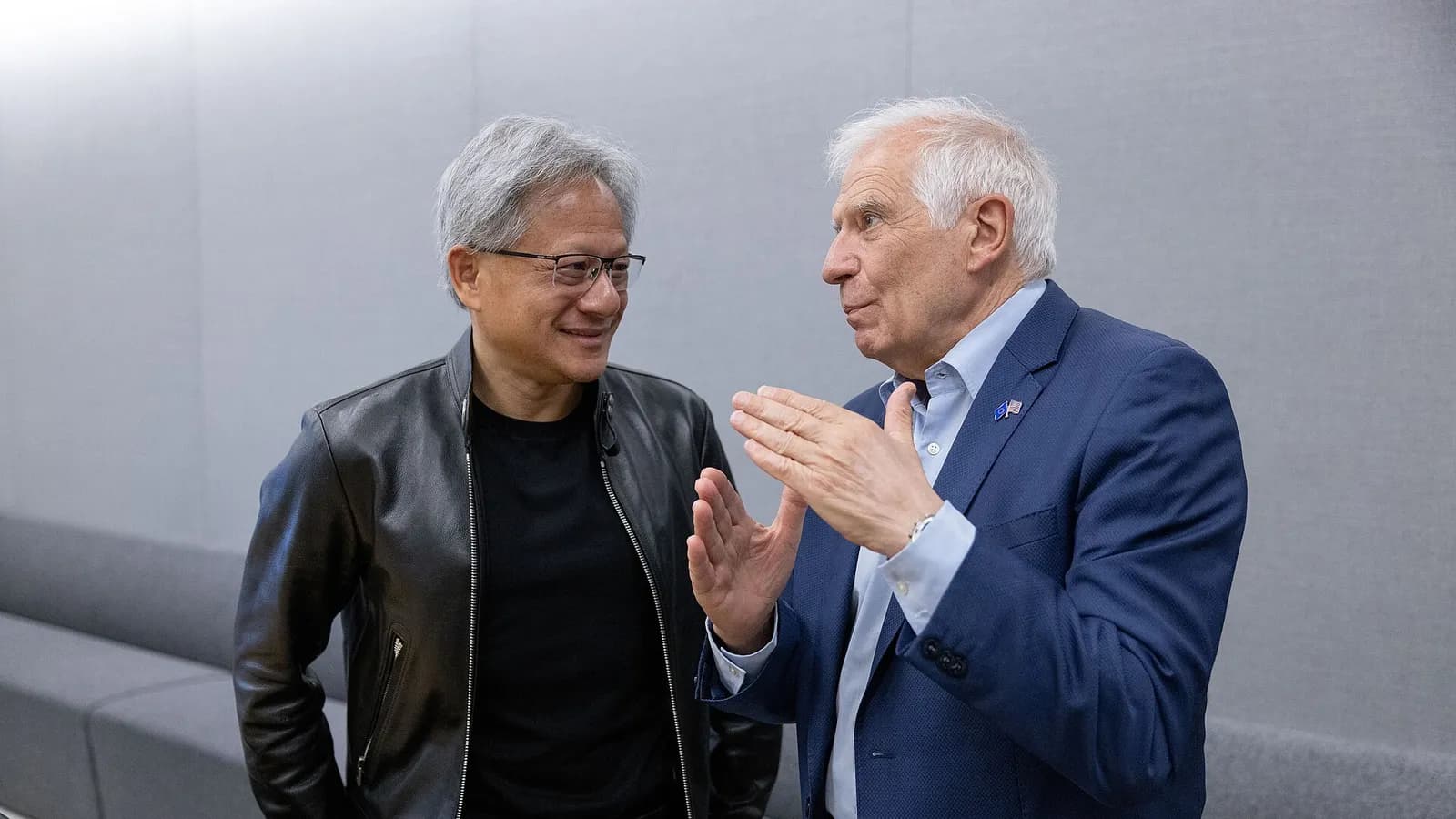
Jensen Huang back as Nvidia CEO is one of the stranger governance stories in recent tech history. Nvidia's board forced his resignation, named CFO Colette Kress as interim CEO, then reversed itself less than two weeks later. For a company that supplies the chips behind most of the world's AI infrastructure, that kind of whiplash is not just gossip. It is a signal worth reading carefully if your business depends on Nvidia, competes with it, or simply watches how large tech companies handle a crisis.
We do not sell chips or run boardrooms. But we do work with teams that build on AI infrastructure and that have to think about vendor concentration and continuity risk. This story is a useful case study even outside the chip industry.
What actually happened when Jensen Huang resigned
According to reporting from The Verge and TechCrunch, Huang resigned on November 12. He admitted he had been unfaithful to his wife, after The New York Times reported a close relationship with Alice Huang, an executive at Nvidia customer Megaspeed. US officials suspected her of passing information to China's Ministry of State Security. A separate report described a second relationship, with an Nvidia vice president who reported directly to him. The board initially said it would not reinstate him and retained an executive search firm to find a replacement.
How Jensen Huang got back as Nvidia CEO
Then, on November 23, the board reversed course. Nvidia said the decision was unanimous and followed discussions with senior levels of the US government. The board concluded that reinstating Huang posed no national security risk. Nvidia's stock closed up 31% that day, with intraday gains reaching as high as 35 percent; pre-market trading had already shown gains of around 27 percent. President Trump publicly supported the reinstatement and said the attorney general found no evidence of unlawful conduct. A group of high-profile tech executives, including Elon Musk, Tim Sweeney and Garry Tan, had also signed a petition urging the board to bring Huang back.
Why the Nvidia CEO reversal matters beyond Nvidia
A handful of things stand out for anyone running or advising a company. The board's "final" decision was publicly reversed within twelve days under outside pressure, including direct White House involvement. The reinstatement statement explicitly cited input from government officials, not just internal investigation findings, which is unusual for a private company's board announcement. Market reaction was immediate and large, with a double-digit percentage swing in share price tied directly to a single leadership decision. Reports of past behavior toward employees surfaced during the same news cycle, suggesting the scrutiny on Huang goes beyond the affairs themselves.
None of this means Nvidia's product roadmap or chip supply changes overnight. It does mean a company this size can have a governance crisis resolved in less than two weeks, once enough external parties have a stake in the outcome.
The concrete lesson on vendor concentration after Jensen Huang's return
If your company's AI or compute strategy depends heavily on a single supplier, this episode is a reminder to stress-test that dependency. Nvidia is not at operational risk today. The exercise itself is simply overdue for most teams. Here are the questions worth answering on paper:
| Question | Why it matters |
|---|---|
| What happens to our roadmap if a key supplier's leadership changes abruptly? | Procurement and contracts rarely account for this |
| Do we have a documented second option for critical hardware or cloud capacity? | Single-vendor lock-in is a known risk, rarely priced in |
| Who owns the decision to pause or diversify if a supplier is under investigation? | Crisis response needs a named owner, not an assumption |
This is not unique to chips. We see the same pattern in software integrations. A business builds its API integrations around one provider and only discovers the single point of failure when something goes wrong on the other end.
What good crisis governance looks like
Separately from the Nvidia specifics, the sequence is a reasonable template to study for your own board or leadership team. Separate the investigation from the public statement: Nvidia's board initially announced an investigation, then moved to resignation, then reversed again after further review, and each step should rest on documented findings rather than pressure alone. Keep HR and legal processes distinct from PR messaging, because blending the two tends to produce statements that age badly once more facts emerge. Decide in advance who speaks for the company during a leadership crisis, and make sure that person is not the subject of the investigation. Finally, write a short succession memo now, while there is no crisis, naming who steps in temporarily and what decisions they are authorized to make.
A real trade-off here: writing these plans takes time away from product and sales work, and most companies never use them. The cost is worth it anyway. The one time you need a succession plan, you need it on short notice, not after the fact.
A note on AI industry concentration
Nvidia's role in the Trump administration's AI policy, in negotiations over Chinese access to AI hardware, and as a financier of other AI companies through its market capitalization, makes this more than an HR story. Companies planning AI projects for 2026 and beyond should treat supplier concentration as a planning input, alongside the usual questions about data residency, model costs and integration complexity. If you are evaluating where AI capability should live inside your own systems, rather than purchased as a black box, our AI and ML development services page covers the trade-offs between building and buying at a smaller scale. The lesson is the same: know your dependencies before you are forced to.
Businesses that rely on Odoo or other ERP platforms face a milder version of the same risk whenever they pick a module vendor or integration partner. We recommend the same discipline we apply to our own Odoo consultancy services: document who owns each dependency, keep source code and data portable, and revisit the list at least once a year, not only after a crisis makes it unavoidable.